Tuesday, August 07, 2007

Love Like Jazz


August 7, 2007

Roses are red.
Violets are blue.
Sugar is sweet.
And so are you!

What a poem of childhood and love! I would guess that most people in America know this poem by heart. I just read a chapter in a book I am reading during my devotional time. This most recent chapter in Blue Like Jazz was about love. I guess the topic of love and the color blue made this silly poem pop right back into my head!

Love. What does it mean anyway? I heard that there are seven different words in Greek for our one word, love. I guess that is why we have to say things like “I love ice cream!” and “I love you, Sarah!” using the same word! I think that the English language has cheated us in this regard. I “googled” the Greek words for love and found a couple of interesting ones.

The word Philia is brotherly love…hence the city name, Philidelphia. This is the love we feel for our best friend or that person who went an extra mile for us. I love a lot of people with that word. Storge is the love we feel within our family. I love Kenna and Hanna, my daughters in ways I have never loved before. There are less people that I love in this way, mostly because my family and extended family isn’t large like some of yours might be. Eros is that love they so often depict on TV…boyfriend and girlfriend love…husband and wife love. This is the love that so often gets us in trouble. It is also the love we use as a drug to mask our feelings of self-hatred and low self-esteem. We try to get that special someone to love us, no matter what it costs us, hoping for an abundant and overflowing type of love only found in the love of God and through God’s love in others. Let me share a paragraph from Blue like Jazz that struck me. Miller writes,

And so I have come to understand that strength, inner strength comes from receiving love as much as it comes from giving it. I think apart from the idea that I am a sinner and God forgives me, this is the greatest lesson I have ever learned. When you get it, it changes you. My friend Julie from Seattle told me that the main prayer she prays for her husband is that he will e able to receive love. And this is the prayer I pray for all my friends because it is the key to happiness. God’s love will never change us if we don’t accept it.
(Donald Miller in Blue Like Jazz, page 232)

When have I refused to receive love? I know that I have spent a good part of my growing up life rejecting that love from my Creator. I was too unlovable, too ugly, too dumb, too everything to be loved by someone like God. I didn’t love myself. How could God ever love me? That is just our mistake though, isn’t it? We forget that God knows our insides and our outsides. In Psalm 139 it says, “For you created my inmost being; you knit me together in my mother's womb.” We cannot escape that God knows us…all the good and all the bad. Why do we let our imaginations get away with ourselves? Why do we think that what we have done is so bad that God will not love and forgive us?

In 1 John 3:18-20, the author writes, “Dear children, let us not love with words or tongue but with actions and in truth. This then is how we know that we belong to the truth, and how we set our hearts at rest in his presence whenever our hearts condemn us. For God is greater than our hearts, and he knows everything.” Let us not just love ourselves with words, let’s do the hardest thing…receive love from the one who loved us first and loved us best. Let us confess all that we do and not keep that sin in our hearts thinking that God cannot see it. Let us live with the strength of God, knowing that God knows us, the real us, and still loves us deeply! God loves us with Agape love. This love is the most used word in the bible for Christian love. Agape love is unconditional, sacrificial, abundant, and amazing love! We are called to spread that kind of love around! What does this crazy, over-the-top abundant love allow us to do as Christians?

Agape love, over-the-top love, allows us to talk to someone who has hurt our feelings rather than the usual human way of talking badly about the person behind their back. Agape love, over-the-top love, allows us to open our church to the homeless during Interfaith Hospitality Network week. Agape love, over-the-top love, allows us to pray for our enemies. Agape love, over-the-top love, allows us to send our dear children to Poland to spread the gospel to those who may not have heard it or experienced it. Agape love, over-the-top love, allows us to rake pine straw at Hope House when most teenagers would rather be home watching TV. Agape love, over-the-top love, allows us to build a building out back, which will be a place to do ministry long after we are taking our dirt nap. Agape love, over-the-top love, allows us to tithe knowing that money belongs not to us but to God. Agape love, over-the-top love, is some amazing stuff!

If you haven’t experienced that agape, over-the-top love, I invite you to open your heart to God. Being humble enough to receive God’s love and God’s love through others is difficult but worth it! I invite you to let God love you. I invite you to let others love you! We do! You will gain the inner strength only found in God’s love and the love God enables in other people. Be brave and let God in!

I love you! God loves you!

Peace out,
Mary

Gracious and ever loving Lord, I invite you into my heart yet again to love me. Enable me to receive and embrace this love you give to me every day. Let me live like I am loved. Let me love others in your name. Let me be a vessel of that abundant, crazy, over-the-top agape love. In the name of our Love, Jesus, I pray. Amen.

Starbucks and Scripture


OK, I confess. I love Starbucks coffee. I know it is expensive. I know it is trendy. I know it is an emblem of American consumerist culture. Yet, they know coffee and they do it well. It tastes delicious! I know they at least treat their employees well…I even investigated working part time at Starbucks in the recent past simply because they provide health insurance for part time employees. More power to them for that!

One of the things I have found interesting at Starbucks lately is the quotations on the side of the cup. For you who are not privy to Starbucks culture… When you purchase coffee in a paper cup at Starbucks, they have quotes from normal, everyday customers printed on the side in their trademark black and green. The one on my coffee cup today struck me cold.

The Way I See It #247
“Why in moments of crisis do we ask God for strength and help? As cognitive beings, why would we ask something that may well be a figment of our imaginations for guidance? Why not search inside ourselves for the power to overcome? After all, we are strong enough to cause most of the catastrophes we need to endure.”
--Bill Scheel
Starbucks customer from London, Ontario. He describes himself as a ‘modern day nobody.’”

Why do we ask God for strength and help? Is God some cosmic genii who answers to our ever whim? Well, no. Does asking God for help makes us feel better? Well, sometimes. So, does asking God for help do anything?

I turned to the Scriptures for some answers to my questions. Paul writes to the church in Philippi, “I can do everything through him who gives me strength” (Philippians 4:13, NIV). So with God’s strength, I can do anything…OK, good…

Paul tells Timothy, “But the Lord stood at my side and gave me strength, so that through me the message might be fully proclaimed and all the Gentiles might hear it. And I was delivered from the lion's mouth” (2 Timothy 4:17). God gives strength if you ask for it. God is even with you in the tough times….That is comforting…

Back in the Old Testament, the psalmist writes, “You are awesome, O God, in your sanctuary; the God of Israel gives power and strength to his people. Praise be to God! (Psalm 68:35). The power and strength of God is not just for the super holy or the saint. It is for all people…That is REALLY comforting to me, the sinner…

Paul tells the church at Colossae, “And we pray this in order that you may live a life worthy of the Lord and may please him in every way: bearing fruit in every good work, growing in the knowledge of God, being strengthened with all power according to his glorious might so that you may have great endurance and patience, and joyfully giving thanks to the Father, who has qualified you to share in the inheritance of the saints in the kingdom of light (Colossians 1:10-12). God gives us strength so that we can have endurance and patience and so that we can give thanks because of our inheritance as children of God. Life on earth is difficult. We do need endurance and patience in order to withstand the brokenness of our lives and to resist the temptation of sin…Whew! This is good stuff!

I think that Mr. Scheel has it wrong. God has been present with me in too many places and I have felt the presence of God too many times for me to write God off as a figment of my active imagination. Mr. Scheels is right in that I do know that I am strong. Now that I have had to withstand some storms in my life, I know that I am even stronger than I had originally given myself credit for. Yet, my strength does not come just from my personality or tenacity or even pure dumb luck. It comes in my grounding of faith. I am unafraid of death, because I know whose I am. I am unafraid of life because I know that Jesus walks beside me in all that I do. I am unafraid of change because God is the same today, tomorrow, and forever.

I invite you to ask God for strength in your daily life. Calling on the name of the Holy of Holies when you are about to loose it with your kids or with your boss invites the strength of the Creator of the universe into your life. God is waiting to be invited into that space with you.

Great and merciful God, be with me in the daily difficulties of life. Walk with me at Wal-Mart. Sit with me Starbucks. Follow me at the Ford dealer. Give me strength to deal with all that is on my plate. Give me endurance to withstand all that tugs on me. Give me patience with my friends and my family. Be my strength and my shield. Amen.

Thursday, June 14, 2007

Do Over...


There are times of life when you get a do over. Perhaps yours was when you moved in the middle of junior high and got to lose the nickname, Skippy. Perhaps, you had your do over as you headed to college and could shed all those constrictions and assumptions about you from high school. I am in the middle of my latest do over. I have spent the last 4 years at beautiful Duke Divinity School cramming my head full of Christian lingo, doctrine, polity, and biblical knowledge. I am done! I have my diploma, nicely framed I might add!

I have also spent the last four years watching my life crumble around my ears and then fighting to put it back together bit by bit. One of last bricks of this part of my life is about to be put back....I am now a home owner again! I have my own place! It is small but is all mine! What a blessing it will be! We have blackberries growing behind the house. We can put up a fence and get a dog. I get to mow grass again! Woo Hoo!

I am also blessed to be sent to an amazing and wonderful church. They really love Jesus and other people. I cannot wait to see what God has in store for my ministry there! God has led me there, and I am excited! Check out what is up at Salem!

www.salemfnc.org

Four years ago I could not picture being in this spot. I could not have made it to this point without God guiding and protecting me. I could not have made it to this place without people loving and caring for me, making sure I ate, making sure I had some fun occasionally, and praying for and with me! God is good! Thank you!

Peace out,

Mary

Saturday, April 21, 2007

Skeletons


I have been blessed to do three years of counseling. I have gone through a lot of pain, sweat, and tears in that time. As a result, I “know what my stuff” is. I now respond to others rather than reacting because I know my story and how it affects me. I have not been afraid to deal with my own stuff with a counselor. In fact, I have been blessed by wading through my stuff. This is my personal image for that process: we all have skeletons in our closets. When we do not deal with the skeletons, they rattle around, are noisy, take up a lot of space, and can hurt us when we bump into them with all the bones they have sticking out. When we do therapy and repent of our broken places to God, accepting the forgiveness God offers; we deal with our skeletons. While the skeletons are still in the closet, they no longer control us. Instead being out where they can hurt us, we have folded them neatly up, and put them away. They are still part of our story, but they are not our whole story nor do they control the story. I have worked to put away my skeletons of negative pastoral identity. I am free of the power my stuff used to have over me. Truly, with God, all things are possible.

Peace out,

Mary

Monday, July 03, 2006

Breaking Away


Breakaway…what a great name! The North Carolina Conference of the United Methodist Church holds a camp for middle schoolers and high schoolers every summer at lovely Louisburg College. Almost 400 youth gathered to worship our Lord and Savior Jesus Christ as well as having a blast! We made our own slip and slides. We made silly home movies. We had worship everyday…Liz Roberts was the preacher…amazing! We studied the scriptures and played silly games with cheetoes and shaving cream. We ate 80 pizzas! The men marched over to the women's dorms in the rain and serenaded us with golden oldies!

Well, that all sounds gloriously boring in print. Luckily, a great time was had by all! No one went home for poor behavior! There were no major injuries! The Gospel was proclaimed and shared with a smile. All in all, a great week.

One thing happened to me personally that will make it a memorable camp experience...

It is a shame that the church forgets how to be the church sometimes. Someone assumed something about me. Instead of speaking about it to me directly, the rumor mill began. Having people talk about me hurt my feelings, certainly. Yet, I had this peace that could only come from God. I hadn’t done anything wrong, so I prayed and waited it out. When the appointed person from the group of people discussing me came to me, I spoke the truth, again with peace. I, however, was hurt more by the process than what was said. It took someone until Thursday to talk to me directly. After the someone talked to me, I was angry and even contemplated going home like a grumpy 5-year old.

Then things began to get in balance again. The person who had initially started the discussion came to me and apologized. The church began to function like a church again.

That is what we do as Christians. When we are wrong, we ask for forgiveness and repent of our wrong doing to God. My friend did just that. I really appreciated her guts for coming to apologize to me. I also admire her for that. She had the courage to admit wrong and mend a broken relationship. What a great thing! That is another wonderful thing about being a Christian. We can turn away from God, yet we can always repent and return to that right relationship with God and our Christian friends.

So, all in all, Breakaway was a difficult yet fabulous week for me. I got to see old friends and make new friends. I also got to see the church at its worst then at its best.

God is so good!

Peace out,
Mary

Friday, June 02, 2006

Boot Camp


Boot camp brings up pictures of Private Benjamin, A Few Good Men, and lots of push ups for me. I got to go to boot camp this month. However, I did not wear anything green or learn to fire a gun. I went to Licensed Local Pastor School, which we affectionately call “Pastor Boot Camp.” Here in nine days, twelve hours a day, twenty-three men and women learned a bit of what it will take all of us to become a pastor as of July 2, 2006.

In the United Methodist Church, clergy must be ordained as an elder, be a probationary elder, or have a license to preach. Those ordained as elders or licensed as local pastors are called to Word, Service, Sacrament, and Order. We are charged with ordering the church, preaching the word, serving the world, and performing the sacraments.

With this license in hand, I can officiate at weddings, funerals, and baptisms. I can even officiate at communion! I am so excited for this opportunity to serve the church in this way! I get to live in the space between God and the people of the church. It is a place that I, and my twenty-two new friends, do not go into without apprehension and flippancy.

I went into this week…let’s say less than thrilled. I knew I had to spend 9 days away from my children and my friends and my church. Horror upon horror! Plus, I thought that I didn’t really need to be there. What could the pastor teaching the day of instruction on preaching teach me that one of the country’s best homileticians at Duke Divinity School didn’t teach me in two semesters of work? Why am I thousands upon thousands of dollars in debt??? Is my Divinity School education worthless???

Yes, I heard things I had heard before. (I am sure other people felt the same way, divinity school or not.) Yes, I had to sleep on a single bed in a dorm. Yes, I had to share a bathroom with 10 women I didn’t know. Yes, I had to go to class 12 hours a day some days. Yes, I took 50+ pages of notes.

However, the week was wonderful! I met twenty-two absolutely fabulous people to be in ministry with and prayer for! What a blessing! I got to hear God speaking to me in the middle of Rocky Mount! I got to run 3 miles every day! I got to eat great food at the cafeteria. (I really mean that too! Yeah NC Wesleyan!) I got to visit my aunt in the nursing home twice! Woo Hoo! Pretty much couldn’t be better other than the nine days…

I am so glad that I went! I admit that I was wrong! Yeah God! God is so funny in the way that God chooses to work. I hadn't decided to have a miserable time, but I wasn't particularly open to the Holy Spirit either. Well, the HS didn't need me to have a completely open mind. The HS was able to break my heart and my stubborn will and flood me with the overwhelming, all-absorbing love of God. God is so very good! I am so glad that God doesn't rely on me all the time! I just can't do it all myself and am not right all the time! So amazing!

Peace,
Mary

Saturday, April 29, 2006

Friends


Hello!

I spent this evening hanging out with one good friend, her boyfriend, some of her friends from Grad School, and a friend of hers from like elementary school or something. You know you have a good friend when her friend suddenly becomes your long lost friend! I have had that experience several times in the last several months. Either I have become a lot more friendly, or I have been picking better friends lately!

It is really neat to meet someone through a mutual friend and KNOW that they are a quality, wonderful, caring, and lovely person. I met two friends through Caroline that way recently. How cool is that? I met a new guy friend, Bradford, that way through another couple of friends. It is like the game of telephone or something but with a great ending. I look forward to getting to know Bradford and Sarah and Elaine much better in the near future!

Peace out,
Mary

Wednesday, April 26, 2006

Real Entertainment


I felt the planet tip tonight. No, that earthquake they keep talking about did not occur. Instead I had a clear mental picture of a bygone era. There used to be, believe it or not, a time before TV. Radio has not always existed either. There was a time in America where people had to actually talk to one another for entertainment rather than just soak up the next episode of CSI.

I had the distinct pleasure tonight of watching a debate between intellectuals. The impetus of this debate (and I will use that term loosely since it resembled concurrent lectures more than a true debate) grew out of the misinformation placed into the public consciousness by the Dan Brown novel, The Da Vinci Code.

Bart Ehrman of UNC-CH’s religion department and Dr. Richard Hays of Duke Divinity School debated the historical Jesus, the evils of the Church, and selection of the cannon of the New Testament. Both men exhibited passion and knowledge of the subject matter. I was actually surprised at how similar their stances were considering Ehrman’s confessed agnosticism in contrast with Hays’ orthodox beliefs.

Even though I was uncomfortably situated on the floor of the dais, I did not want the evening to end. There was intellectual conversation, witty repartee, laughter, all pure entertainment.

I invite you to turn off you television and engage someone in a discussion. Read a book with a friend. Dissect that poem you have always liked. Take a stand. Have a conversation. Be witty! Be clever! Be intellectual! Turn off your TV and exercise you mind and your voice!

Peace out,
Mary

Thursday, April 20, 2006

Suffering Isn't Just for Black Folk Anymore


Hi again,

I am in the midst of exams, but I thought I would share this paper with you. I have spent this semester reading about things I never knew a thing about. I had no idea how horrible the Middle Passage was. I had no idea the double amount of discrimination Afro-American women deal with every day. I had never read W.E.B.Du Bois. I had never heard of womanist theology. I had never read an account of a lynching. I have spent much of this semester very emotional and not quite sure why. I have grown a lot. If you read this, perhaps you can see some places I have been stretched...

Peace Out,
Mary

Suffering Isn’t Just for Black Folks Anymore
A Critical Essay on the Works of Albert P. Raboteau
And Matthew V. Johnson

In the 2001 Harold M. Wit Lectures given at Harvard Divinity School later published and entitled A Sorrowful Joy, Albert Raboteau gives an autobiographical overview of his Christian walk and his life as an academic. In this narrative, Raboteau challenges the Afro-American community to embrace the Orthodox Church as an extension of the Black Church Tradition rather than dismissing it as an unrelated Europeans-only idiosyncratic religious expression. He argues that the Orthodox Church better honors the Black Church Tradition than the current Black Church. The reader walks on this journey of faith with Raboteau to discover the influences upon his thinking and spiritual formation as well as examining times of personal difficulty with him and witnessing how God acted in those times of trial.

In contrast to the personal narrative of Raboteau, Matthew V. Johnson uses the occasion of the Mel Gibson film, The Passion of the Christ, to discuss the Afro-American Christian use of the passion narrative as formative for theology. Johnson then uses the Passion of Christ as a lens through which to read the Afro-American experience as a group on the periphery of American life. This paper will focus on Johnson’s final section, Crucifixion and the Tragic Vision, while drawing upon themes that run across Raboteau’s entire work including Orthodoxy’s embrace of suffering and redemption and how suffering links Christians to one another. Johnson uses the suffering in the passion narrative to explain that Black suffering is redeemed by Jesus Christ in his suffering while suffering is portrayed on a personal level in Raboteau’s autobiography. Suffering causes Raboteau to change elements of his life. While the non-Afro-American reader might be able to dismiss Johnson’s work as unimportant to his life or her Anglo-centric Christianity, Johnson’s focus on the Passion, indicates how God’s saving action on the cross captured the whole of humanity. Johnson invites the Church, and the white Church in particular, to examine and adopt three distinctives of the Black Church Tradition that honor the Gospel message.

First, Johnson explains crucifixion, not the nature of its painful effects on the human body as a device of torture, but as an instrument used by the powerful to control the people of the periphery. He writes, “Crucifixion is reserved for those on the periphery as opposed to those at the center.” Afro-Americans experienced racial crucifixion in the process of slavery including its lingering forms of subjugation. This subjugation forced Afro-Americans in slavery to question their existence and whether or not they were fully human just as these questions’ ripple effects force Afro-Americans today to question the same things. Johnson explains, “Christ’s incarnation culminating in the cross, leads to a complete identification with the slave and all of humanity at its lowest and is the most concrete expression of its tragic condition.” Black Church Theology works to make sense of the artificially created sense of “other” which black folk were forced to assume. The white power structure took God hostage and began to decide salvation and worth based on race. However, because God became “other” and subsumed humanity in total, including the lowest and least powerful of humanity, Jesus suffered and thereby redeemed all people. Therefore, a sub-group of humanity cannot control Jesus or the salvation he brings in suffering, death, and resurrection. For Johnson, this first distinctive is a message that the Black Church must deliver to the world. In fact, he believes that this message is more in line with the Gospel message found in the Bible than any current expression of Christianity.

Similarly, Raboteau uses this Gospel message of suffering but centers the gospel message in the Orthodox Church rather than the Black Church. He writes, “Christianity is a religion of suffering. The suffering of Christ and of the martyrs is at the center of the Christian tradition and suffering grounds the Christian to the suffering of the world.” Christianity, especially mainline white Protestantism cannot sanitize the gospel message, as one devoid of suffering even though that might be more comfortable. Raboteau goes on to say, “As the old slaves knew, suffering can’t be evaded, it is a mark of the authenticity of faith.” Without the context of suffering, Christianity makes sense only as a “feel good” moral code. Salvation cannot play a part without suffering. Without acknowledging suffering, humanity cannot acknowledge from what it must be saved.
Secondly, Johnson focuses on the dialectic of personal and communal experiences in the Black Church Tradition. In the Afro-American Church, conversion, for example, does not occur in an isolated individual vacuum. The individual shares in the communal spiritual belief structure and therefore joins those people in the spiritual community. The corporate belief modifies the individual belief and vice versa. Because self-worth had to be created, community grew in importance in the Afro-American psyche. Afro-Americans had to grapple with “the utter threat of non-being, which, translated into psychological terms, is the threat of the meaninglessness and worthlessness of existence.” Living in the world feeling meaningless and worthless impacted the worldview of the Afro-American slave, including the view of self. Self worth had to be created by effort, an effort on the part of both the individual and the slave community. Community continues to be important in Afro-American culture. For example, something formative happened when Raboteau read slave narratives while doing his Ph.D. work. These narratives testified to the slaves enduring suffering and even triumphing in suffering. First, he changed from reading them with an academic lens to reading them with a theological lens due to the power of the story. Next, he became linked to their suffering by experiencing it in their writing. Reflecting on that experience, he writes, “I became fascinated by the voices of former slaves…not just as historical evidence but as voices that seemed to speak directly to me.” An understanding of suffering linked Raboteau with others across time and space. In this second distinctive, the Church needs this testimony of the Black Church Tradition, of the building of self and of building community to combat a culture that continually tells the self that it is omni-important and isolated. The Church needs to be reminded that Jesus Christ links all believers together into a community of faith.

In the Black Church, something considered purely individual like a conversion experience, can only be understood within the “context of the rich communal experience.” The individual exists in time and place and as a part of a certain community. The community influences the individual by encouragement or setting the stage or simply providing the expectation of conversion occurring. Yet, this communal experience does not end when the worship experience ends. Johnson explains that this communal experience influences “the intersubjective subset of alternative meanings that formed the slave community’s alternate spiritual world—a world validated only in and through their shared experiences.” The crucifixion of personhood in slavery made the communal identity and belief structure crucial to the mental health of the slave, therefore, creating a tragic view of the gospel with the Passion of Christ as the central theme. This message is not just for the Afro-American community, but is also for the world. This shared communal structure has not dissipated over time. For Johnson, this sense of community exemplifies Christ’s message and is part of the second message from the Black Church Tradition to the world. He writes, “Christ lives in and amid the community and indeed is the community, and as such his broken body mediates grace and wholeness.” Broken individuals can come together to mediate grace and wholeness to one another. Raboteau mirrors this theme of the broken bringing healing to the broken. In describing the Souls in Motion mission where he met his second wife, Raboteau notices how a “wounded” individual ministered to another wounded soul. Furthermore, he believes that the Orthodox Church best displays care for the whole person. The Church can take a cue from this theme of wholeness and draw upon the past and current suffering inherent in the Afro-American experience rather than ignore or diminish it. Likewise, the Church can use the Afro-American Church experience with suffering and pain to minister to the all members of the Church and teach the whole Church how to make sense of suffering and come to an understanding of theodicy.

Lastly, this dialectic of the personal and the communal mirrors the dialectic importance of the death and resurrection of Jesus Christ in Black Church Theology. This ability to keep the two events together makes up the final message to the world from the Black Church. Life is tragic, ripping, and painful. By living life abundantly amidst pain, the Afro-American Church shows the path to redemption. Johnson states, “The tragic subject sees reality for what it is but in the midst of it affirms life’s value out of its depth, ever overcoming through creativity and the transfiguring powers of beauty.” Raboteau argues that the Orthodox Church embraces the suffering and redemption abandoned by the Afro-American church. The Church must examine this last distinctive and begin to grapple with past and present suffering in order to circumvent future suffering. With this, the Church must heal the brokenness especially the damage done by the role the Church played and plays in slavery and racism and division.

What do we make of suffering as the Church? How do we make sense of the presence of evil in the world and the suffering it inflicts? The Church must turn and face the suffering inflicted by individual actions and actions within the groups to which individuals belong rather than run from it or deny its existence. A person with pale skin cannot simply push off slavery and the subjugation of humanity as a problem of a bygone era or of a different people. As members of American society in 2006, people participate knowingly, as well as without realizing it, in the eddies and undercurrents of racism, bias, and classism. It is when the Church adopts Johnson’s stance and hears the message of the Black Church Tradition that the Church can gain insight into the quagmire in which it sits. First, we must throw off the bonds of individualism and examine how we can work together and support one another as a community in the Church. Secondly, the Church can no longer pretend that suffering does not exist or that it does not exist in our individual lives. The Church must, like the Orthodox Church and the Black Church Tradition, begin to speak of suffering truthfully. The Church must name the suffering occurring in families today and do something about it. The Church must notice the homeless people ten yards away from the front step of the church building. The Church must find ways to discuss suffering from the pulpit, in the aisles, and in the hallways. Suffering does not only occur in a land far, far away. Every soul has bent and broken pieces and gaping holes where God can heal, and the Church needs to be brave enough to call suffering, suffering and do something about it. Lastly, we cannot ignore the dialectic of death and resurrection. Humans like to think of Jesus on Christmas, as the sweet child in the manger. The Jesus on Resurrection Day is much more dangerous because he calls humanity to change. The Church must be brave enough to cede control to God and allow God to redeem humanity in the way only God can. When suffering happens, God calls the Church to action. When the Church acknowledges suffering, suffering can change to hope. In redemption, humanity gains responsibility. The Church cannot simply “pray about” an issue. Because each human “bears the very image of the Creator,” the church bears responsibility to care for each human whether he is getting divorced, has lost his job, is being discriminated against, or suffers from depression. The Church must begin to name the suffering and take action in the name of the one who suffered for salvation.

Questions for discussion:

1. What does Black Church Theology tell the world today? What should it be telling the Church as a whole? Is the Church willing to listen? Will your congregation listen? What will it take to make that happen?
2. Now we are to the point of the semester when you wonder, so what? After spending this semester reading some difficult material and scratching the surface of the treatment of suffering and evil in Black Church Theology, what has changed in your thinking? What will you take away from this class? How has this class affected your life and/or your ministry?

Friday, March 24, 2006

Much Ado about a lot


I am taking a class on Black Church Theology. We have read many difficult pieces. Here are my thoughts about readings this week:

When I was teaching third grade here in North Carolina in the nineties, I would get so angry in February because it was Black History month. While I was glad that teachers did mention the accomplishments of Afro-American people, I saw it and still see it just as a continuation of the typical paternalistic, racist Anglo worldview. Because Black History month exists, it is then ok to ignore Afro-Americans the other eleven months of the year. When Martin quoted Butterfield, that scenario popped into my mind immediately. Butterfield writes, “Black autobiographies fill in many of the blanks of America’s self knowledge… [because of the] blind spot toward Afro-American culture” (Martin, 16). Black History month has us put on our special 3-D glasses so that we cannot see the huge eraser marks in our history books, magazines, and neighborhoods.
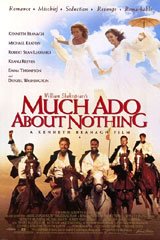
How can we mitigate or modulate the damage or fill these holes in our history? As Martin suggests, writing spiritual autobiographical pieces allowed Afro-Americans to process the pain and suffering and begin to heal from it. Writing “also provided a vehicle through which their authors could gain literary power and authority in the language of the dominant culture” Martin, 21). The writing can cause healing in the writer as well as drawing the reader into the life and struggle of the writer. Perhaps if we look at the writings of Afro-Americans as writings and not as something out of the ordinary to be pulled out of the drawer only in February, we can begin to see people as people and not stereotypes. I remember noticing the lack of race playing a factor in a character in the movie, Much Ado About Nothing. Denzel Washington plays Don Pedro of Aragon, one of the lords of the manor. However, the part was not a “black” part. In fact, Washington’s portrayal had nothing to do with the color of his skin. I remember marveling at that in the first five minutes of the movie and completely forgetting about skin color the rest of the movie. I am not suggesting that racial identity and cultural heritage should be sanitized, but I wonder what we would gain by treating people like people and reading literature because it is literature not merely because of the cultural heritage of the writer. Martin writes, “Liberation from suffering, evil, and oppression was thus perceived to represent only the beginning of a journey wherein one acts with God to exemplify the realities of freedom and justice and community formation within the sociopolitical and religious institutions of a society” (Martin, 24). Are we merely at an early point of the journey from slavery to freedom? How can the church push the culture to move further and faster on that journey?

Sometimes it seems like we merely spin wheels on the journey rather than making real progress. For example, minorities feel trapped by the assumptions about their minority and by their status as a smaller group. The squeaky wheel gets fired, harassed or even lynched. As Stewart writes, “The reason why our distinguished men have not made themselves more influential, is because they feel that the strong current of opposition through which they must pass would their downfall and overthrow” (Stewart, 73). I immediately connected to Stewart’s analogy of Solomon and the temple and whites and America. Solomon got all the credit for the temple and lifted not a finger to build it. America, especially the South, was built by the blood, sweat, and tears of Afro-Americans yet whites can resent their presence in positions of power in the very communities they built. White minds seem to easily regale Afro-Americans to sub-human status yet are unable to change the mindset back. Similar to the shop manager’s comment in Gilke’s piece, if it wasn’t for Afro-Americans, we wouldn’t have a society (Gilke, 1). What skills are being underutilized? Gilke goes on to say, “Black women know how radically dependent their churches and communities are on their presence and actions for both organizational integrity and effective mobilization” (Gilke, 7). How can we turn this tacit dependence into acknowledged power in the church?

If we won’t do things such as this, who will?

Peace out,
Mary

Friday, February 17, 2006

Haze


I am in a lot of pain today due to a fun medical condition. It is nothing to worry about, just annoying. However, it has me thinking about haze. I have gone around today in a sort of a haze. I have had to measure every word. I had to think about things like breathing. And worst of all, I had to pretend that there is nothing wrong to people that just didn’t need to know!

We are like that in life. We have a certain haze that hovers over us and affects how we view the world. You might have the haze of racism or sexism. You might see the whole world as out to get you. You might be angry at your spouse and lash out at the grocery clerk instead.

Psychotherapy has helped me see the haze which has surrounded me most of my life. Naming those issues has been so empowering to me! I am so glad that I was brave enough to name the pain rather than continue to live with a hazy outlook on life. I invite you to look around and see what might be blocking your view of the world and begin to peel back the layers and deal with it.

Peace out,
Mary

Here is a Three Doors Down Song that goes along with my thoughts today...

Running out of Days

(Music by Arnold, Roberts & Harrell)

There's too much work and I'm spent
There's too much pressure and I'm bent
I've got no time to move ahead
Have you heard one thing that I've said

All these little things in life
They all create this haze
There's too many things to get done
And I'm running out of days

I can't last here for long
I feel this current it's so strong
It gets me further down the line
It gets me closer to the light

All these little things in life
They all create this haze
There's too many things to get done
And I'm running out of days

All these little things in life
They all create this haze
There's too many things to get done
And I'm running out of days

Well all these little things in life
They create all this haze
And now I'm running out of time
I can't see through this haze

My friend tell me why
It has to be this way
There's too many things to get done
And I'm running out of days

Friday, January 27, 2006

Life is Good!


Here is an excerpt from a letter I wrote this week:

I had my final psychotherapy session today. I am celebrating that! In the last several months, Dr. P and I have been taking a look back and reflecting on where I have been and how my life has changed. I have come a really long way in the past two and a half years! I have come out of a very broken and painful time whole and stronger than when I fell into it. In that, I have really explored family of origin issues and the accompanying self esteem issues that I had not realized I had. I was able to understand things about my father's alcoholism and the manifestation of the pain in that relationship within me. I have really talked about my relationship with my husband and how things got so broken in the first place. I have learned a lot about myself and some good counseling techniques, too. However, the most important thing I have gained from this experience has been the realization that I am indeed a broken sinner in need of the love and healing that only Christ can give. I know that Jesus is my Lord and personal savior in ways I just did not prior to 2003. This experience has really been a tempering event in my life. With that, I can see how I will be a better pastor for going through this experience. I have a new understanding of the brokenness of humanity along with my new humility and skills.

My new favorite T-shirt company and slogan is "Life is Good!" I claim that and am enjoying life immensely. School is going really well though I am really afraid of the exams in American Christianity. I am enjoying my classes and deepening my theological vocabulary. I was paid a high compliment today. I am on the organizing committee for our monthly lunchtime talent show. I emceed the show today. One of my fellow students complimented my banter and said that I was like a younger SB! (Can't beat that sort of compliment!) Working at the E has been wonderful. I, for the first time, am a pastor. My supervisor has treated me like a pastor from day one. The congregation has embraced me and treats me like a pastor. More importantly, I am confident in my call and my identity as a pastor.

However, my life is nowhere near perfect. The difference in the me of two years ago and the me of today is that I have skills to handle anything life throws me. For example, I spent Christmas without my children or my family for the first time, ever. That was extremely painful. I knew it was going to be difficult so, I spent much time in prayer and made plans for the rocky parts. Yet, in that difficult time, God had mercy on me and blessed me in so many ways. I spent Christmas with a friend and her large extended family. I learned lots of Polish Christmas traditions and was able to be helpful to them when one of the children fell ill on Christmas Day. In a show of true agape love, a group of my School friends chipped in and bought me a present because they knew that I would not be receiving many gifts that day. I felt so loved! With the support and guidance of my pastor, I was able to write a sermon in 36 hours and preach it Christmas Day even after being at church late on Christmas Eve. (I know, I know. I will not have two weeks to write a sermon in the real world. However, 36 hours was a big step for me!) Plus, I received no less that 5 invitations to go home with people from my congregation after worship for lunch and Christmas festivities. In every experience, I felt God's love and presence with me. This Christmas was hard, but I would not trade it for anything.

I was strong enough to handle the fire. It is good to feel stronger from surviving the flames. All things are possible with God.

So, I plan to live another Life is Good slogan, "Do what you like! Like what you do!"
Peace out,
Mary Frances

Sunday, December 18, 2005

Red Dress


There is just something about wearing red that makes you feel sassy! You feel like you can take on the world! This weekend I had the honor and pleasure of being a bridesmaid in my friend Claire's wedding. It was a lot of fun dressing like a princess for the day. I have NEVER had that much hair spray in my hair in my life! It was rather amazing what Eunice did with a curling iron and 30 bobby pins.

It was great fun socializing and eating wedding cake! I was so glad to be a part of their special day!

I hope that you and yours have a really special day some time soon!

Peace out,
Mary

Thursday, December 08, 2005

Princess


Sometimes in life you get to be a princess! It is a lot easier to do when you are five and have costumes and plastic shoes at the ready. Luckily, there are times when you get to be a princess as an adult. Getting married is one of those times! But you know, it is sad that we treat people like a princess (or a prince) only at certain times of life or on certain days.

I think, perhaps, we should treat people like they are important, valued, and special every day! Perhaps that is a better and more healthy way to live life.

Can you make the waitress at your favorite restaurant feel valued? Do your children feel special, every day? Did you put a love note in someone's lunch box today? Does that special person in your life know, without a doubt, that he or she is the most important person in your life? Did you act, really act, on the feelings of love and affection you have? Did you do it today? If you didn't do it already, do it now!

One of my new favorite bands is SuperChik. You can check them out at http://www.superchickonline.com/_v2/index.php

The last song on their latest album starts off with a verse about a mother who didn't tell her son that she loved him before he left for the day. He died before he returned home that day. The chorus goes like this...

We live we love
We forgive and never give up
Cuz the days we are given are gifts from above
Today we remember to live and to love
We live we love
We forgive and never give up
Cuz the days we are given are gifts from above
Today we remember to live and to love

I am going to remember to live and to love today!


Off to make someone else feel important...

Peace out,
Mary

Tuesday, November 15, 2005

Prayer


I am taking a class about Jewish Prayer this semester. It has really pushed me to think about prayer in the context of the community. My Protestant Liberal mind has trouble understanding that I cannot do things alone. Here are some thoughts I had this week in my journal entry for class.

Peace out,
Mary

Prayer is connected in a deep and intimate way to the world, to God, and to the God's people. The interactions do not work like a flow chart but more like a web that binds the individual and community closer to God than the individual can do alone. Individuals pray but they use the words of the community and thereby engraft themselves into the community in prayer. Kaplan explains, “in order that our participation in communal worship shall enable us to experience the presence of God by bringing into operation our gregarious nature, it is necessary that we feel strongly our identification with the worshiping community and the totality of its interests.” The Jewish community must be a part of the individual’s prayers for those prayers to have context and to make sense. Heschel echoes that when he writes, “we start with a personal concern and live to feel the utmost, for the fare of the individual is a counterpoint in a larger theme.” It is within the community that the individual understands that he or she is a smaller part of an immense picture. It is when you stand beside the ocean that you realize just how small and insignificant you are. The relationship with God makes the individual infinitely significant through God’s love.

Similarly, it is as an infinitesimal part of the picture that we can see the world differently through prayer. Heschel also writes, “we do not step out of the world when we pray; we merely see the world in a different setting.” Prayer allows the individual to see rightly and to orient him or herself on God while out of God’s presence here in the world. Heschel also writes, “We constantly pour our inner light away from Him, setting up the thick screen of self between Him and us, adding more shadows to the darkness that already hovers between Him and our wayward reason.” The community shows the individual how to reorient the light and pulls back the screen. We need to know who we are and to whom we belong. Kaplan also echoes this thought, “The worshipper is made aware of the reality of God and His sway over the human heart, when he joins with the throng in public worship.” Kaplan also explains it this way, “Realizing that others share our needs, our hopes, our fears, and our ideals we no longer feel dependent entirely on our own efforts for our salvation.” We human beings think that we are the center of the universe, that we can control our destiny, and that we are created rather than creation. As Kaplan says, “We see God in relation to the community using it as a reference point.” The community holds up the mirror to show us that this is not the case, and therefore serves as a beacon on the ocean so that the individual can move to the right longitude and latitude to be in relationship with God.

I believe that I have been misinterpreting communal prayer for a long time. I thought it to be restricting, boring, and even trite on occasion. However, I must admit that I was wrong! I cannot pray on my own little island all the time. I need the community, the communion of saints to shape my prayers and help me orient on my creator.

Saturday, November 12, 2005

Up and up...


What a great feeling that was, climbing to the top of my parents' magnolia tree with my sister and my friends. You could see forever up there at the top. The breeze was so invigorating! Sometimes the tree would be a pirate ship. Sometimes it was the Bat Cave. (We did have to suspend reality for that one...the elevator for the Bat Cave had to go up instead of down!) When you are nine years old, it is so easy to suspend reality. Perhaps, we adults should take a clue from the kids in our lives. Where is the joy in your life? Where do we put aside the harsh reality of life and enjoy it!

I am learning that you need to put down all the junk and live a little. I am listening to more music. I am taking better care of myself. I am spending time with my friends and family. I no longer am stuffing my schedule full so that I don't have to spend time on myself. I am spending time with myself and realizing that I am pretty cool!

I claim happiness! God created me to feel joy with the pain. I am choosing the joy!

Peace out,
Mary

Sunday, October 30, 2005

Power of water


Today I did something that not many people get the privledge to do, I was used by the Holy Spirit to speak the word of God. Pretty cool actually! People say that there is nothing that can prove God's existence. If that is the case, then I could not do what I do. I am not the person who lives for public speaking. I do it with fear and trepidation. I lack some self confidence (which I am addressing with psychotherapy, I might add), the ability to tell jokes, lots of clever stories, and that sexy, velvety radio announcer voice. Luckily, all of that is irrelevant when you deal with the Holy Spirit. If you listen for what the HS wants you to tell God's people, you do a good job! I grasped tightly to that the whole time I prepared. It is so funny, though, that the HS told me to say things through my research. I was still nervous since my parents were in the congregation!

This is the message that the Holy Spirit wanted out and about: You do not have to stay as a sinful, ugly, jagged parking lot rock. You can ask Jesus to be your Lord and Savior and be immediately washed smooth through Jesus' sacrifice like a beautiful skipping rock is worn smooth in the power of the river. Jesus has some pretty powerful water to wash clean all my sins.

Life as a conduit is pretty darn cool!

Peace out,
Mary Frances

Tuesday, October 25, 2005

Joy


There are times in your life where joy seems like a tangible thing. Kindergarten seems full of those. When else in your life can you strip down to your underwear and paint whatever you want? No one has told you that you can't draw, so you draw these fabulous pictures. No one has told you that you aren't pretty or perfectly proportioned so you are still comfortable in your own skin. Everyone is your friend in Kindergarten, even the kid who spends lots of time in time out. You are beginning to get a handle on how this thing called life works. Everything is an adventure!

I think I am in the middle of returning to kindergarten. I have found a joy in life that has been missing for a long, long time. I am finally becoming comfortable in my own skin again. I have made a new friend who has opened my eyes to some cool stuff. I am being a better friend to a lot of people. I am beginning to get into an equilibrium in my life. I could use some adventure though!

Joy to the World,
Mary Frances

Thursday, October 20, 2005

Fabulous People


Sometimes you just need to sit and realize how fabulous the people that surround you in life are. I have two creative, smart, wonderful, and beautiful children. I have some really great friends who have been there for me in tangible ways during the last two crazy years of my life. I have a best friend who has listened to all my stories. I have a new friend who just amazes me. My friend singing above has such a sweet spirit and encourages everyone she talks to. I am very lucky!

Life is good!
Mary

Saturday, October 15, 2005

Hero


A hero. Some one you look up to usually because they are smarter or stronger or better looking. What is it that makes us need to compare ourselves to others?

My daughters met their heroes today. We drove three hours to see a concert at the Cotton Ginning Days festival. What a treat! The Peasall Sisters were lovely! The music was wonderful and the weather was just right for a festival. Life is good!

Peace out,
Mary

www.peacehall.com